From Traditional Southern Moonshine to Unique Heirloom Whiskeys — Discover How Different Corn Varieties Influence Flavor
When most people think about making corn whiskey or traditional moonshine, they picture a bag of ordinary yellow cracked corn. And for good reason! Yellow dent corn has been a staple of American whiskey production for generations. It’s affordable, readily available, and produces a dependable whiskey with that familiar sweet corn character.
But what if we told you that the variety of corn you choose could completely change the personality of your whiskey?
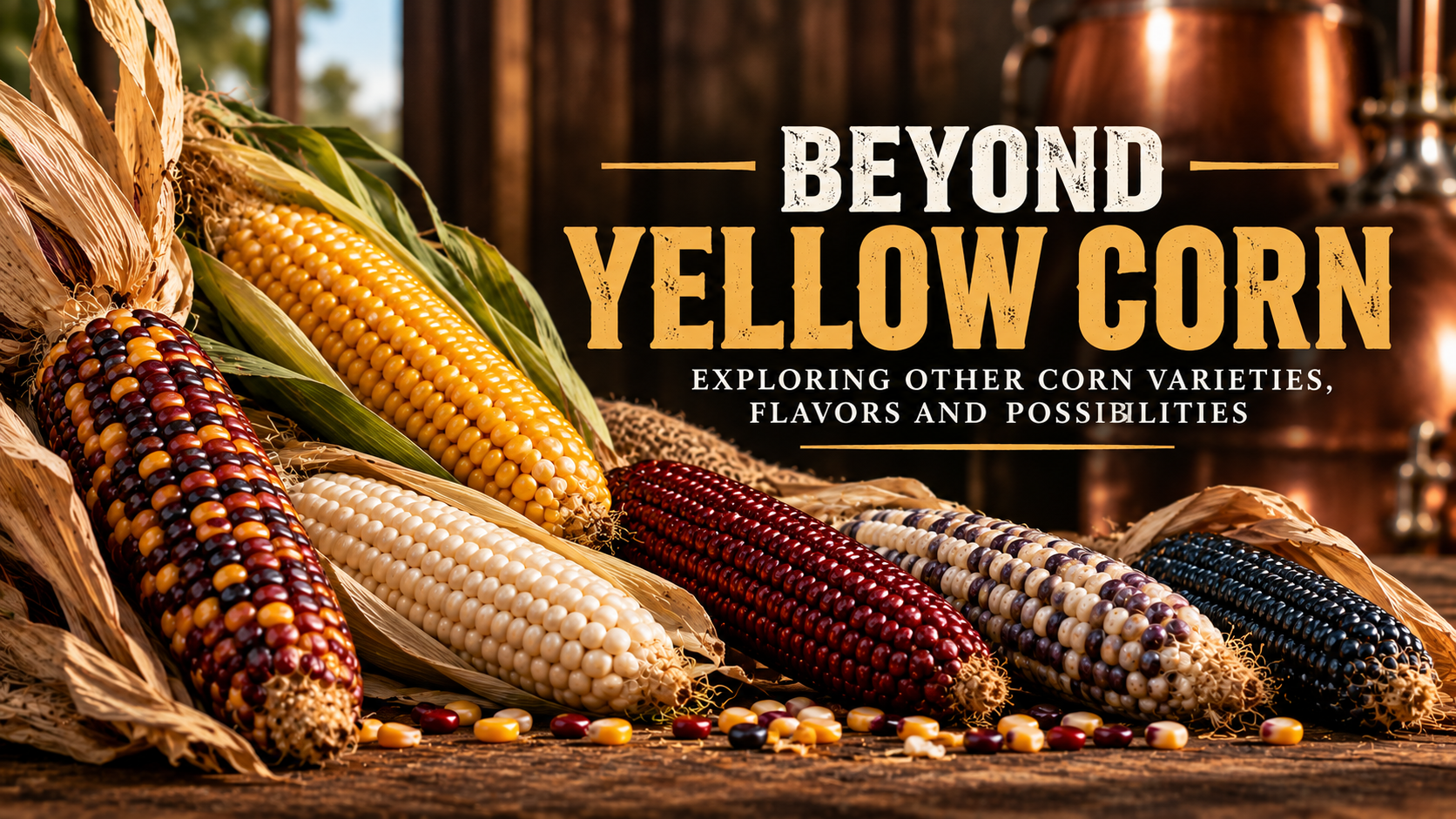
From deep red heirloom varieties to beautiful blue, purple, and creamy white kernels, corn comes in an incredible range of colors, textures, and flavors. Many of these varieties have histories stretching back hundreds of years, long before modern commercial corn became the industry standard.
Today, hobby distillers and small craft distilleries are rediscovering these heritage grains and experimenting with their unique characteristics.
Just like different varieties of grapes produce different wines, different varieties of corn can contribute different flavors, aromas, and textures to whiskey.
Let’s explore ten varieties worth knowing about, what makes each one special, and the flavors they may bring to your next batch.
-
Yellow Dent Corn — The Traditional American Whiskey Standard
Flavor Profile: Sweet Corn • Cornbread • Toasted Grain • Buttery • Mildly Nutty
Yellow Dent Corn is the workhorse of American whiskey production. Named for the small dent that develops at the top of its mature kernels, this corn variety contains plenty of starch and has become the standard choice for everything from traditional moonshine to commercially produced bourbon.
Its biggest advantages are consistency, availability, and affordability. For hobby distillers who are just getting started, yellow dent corn provides an excellent baseline for learning how grain selection, fermentation, and distillation affect the final product.
Expected Whiskey Flavor Profile
- Aroma: Fresh cornmeal, warm cornbread, and lightly toasted grain.
- Taste: Classic sweet corn character, gentle cereal sweetness, and mild nuttiness.
- Mouthfeel: Medium-bodied, sometimes slightly oily.
- Finish: Clean, familiar corn flavor with a lingering toasted-grain character.
Yellow dent produces the kind of straightforward corn whiskey many people associate with traditional American moonshine. It also works beautifully as the foundation for bourbon-style recipes incorporating rye, wheat, or malted barley.
Best For: Beginners, traditional corn whiskey, bourbon-style mash bills, and economical larger batches.
-
Hickory King White Corn — Smooth, Creamy Southern Tradition
Flavor Profile: Creamy Corn • Buttery • Sweet Cornmeal • Lightly Nutty • Mellow
Hickory King White Corn is an old Southern heirloom variety known for its unusually large, creamy-white kernels and excellent milling qualities.
Long appreciated for cornbread, grits, and traditional Southern cooking, Hickory King White also offers exciting possibilities for whiskey makers searching for a smooth, old-fashioned corn character.
Its sweet, creamy grain qualities make it particularly appealing for traditional unaged corn whiskey.
Expected Whiskey Flavor Profile
- Aroma: Sweet cornmeal, fresh grain, and a touch of buttery popcorn.
- Taste: Creamy corn sweetness, light nuttiness, and subtle toasted-grain notes.
- Mouthfeel: Rounded and potentially creamy, with a soft grain character.
- Finish: Mellow, lightly sweet, and gently nutty.
Hickory King White is a great choice for distillers who want to emphasize the natural character of corn without introducing an overly assertive or earthy flavor.
When barrel-aged, its mellow corn foundation can complement vanilla, caramel, and toasted-oak notes.
Best For: Traditional Southern moonshine, white whiskey, smooth corn-forward recipes, and bourbon-style mash bills.
-
Blue Hopi Corn — Rich, Nutty, and Distinctively Southwestern
Flavor Profile: Roasted Nuts • Toasted Corn • Earthy • Cocoa-Like • Warm Grain
Blue Hopi Corn is a traditional blue corn associated with Hopi agricultural heritage in the American Southwest. Recognized for its striking blue or blue-purple kernels, it has been cultivated for generations and remains important to Indigenous food traditions.
Its pigmentation comes largely from naturally occurring anthocyanins. However, the beautiful blue color of the grain does not mean the finished whiskey will be blue.
For whiskey makers, the appeal of Blue Hopi is its distinctive grain character and potential to contribute a richer, toastier flavor than conventional yellow corn.
Expected Whiskey Flavor Profile
- Aroma: Toasted corn, warm grain, and roasted nuts.
- Taste: Nutty corn character, earthy undertones, and possible cocoa-like or roasted-grain notes.
- Mouthfeel: Medium to full-bodied, depending on the distilling process.
- Finish: Toasty, mildly earthy, and pleasantly nutty.
Blue Hopi can be particularly interesting in unaged whiskey, where differences in grain character may be easier to recognize without the influence of barrel aging.
It can also complement rye or malted barley in a more adventurous whiskey recipe.
Best For: Specialty corn whiskey, experimental micro-distillery releases, and distinctive heirloom mash bills.
-
Amanda Palmer Corn — A Colorful Corn Created With Distilling in Mind
Flavor Profile: Sweet Grain • Fruity • Nutty • Rich Corn • Complex
Amanda Palmer Corn is one of the more unusual varieties available to modern whiskey makers. Unlike many heirloom corns that were originally cultivated for food or general agricultural purposes, Amanda Palmer was developed specifically with distilling applications in mind.
Bred by distiller and grain specialist Alan Bishop, this multicolored corn brings together diverse corn genetics selected over multiple generations.
Its kernels can display a beautiful mixture of yellow, red, blue, and other shades, reflecting the unusual heritage of this specialty grain.
Expected Whiskey Flavor Profile
- Aroma: Sweet corn, fresh grain, and potentially light fruity notes.
- Taste: Rich corn flavor, gentle nuttiness, and possible fruit-forward complexity.
- Mouthfeel: Rounded, with a potentially rich grain character.
- Finish: Sweet grain, subtle nuttiness, and lingering aromatic complexity.
Amanda Palmer is especially interesting for distillers interested in exploring how specialty grain breeding can influence a finished spirit.
Its potential for fruity and aromatic characteristics makes it an exciting option for experimental whiskey production.
Best For: Experimental whiskey, specialty heirloom releases, creative mash bills, and distillers interested in unique grain genetics.
-
Bloody Butcher Corn — Bold, Rustic, and Full of Character
Flavor Profile: Toasted Corn • Nutty • Earthy • Buttery • Warm Spice
Bloody Butcher Corn is one of America’s most recognizable heirloom corn varieties. Its name comes from its dramatic deep-red kernels, which can produce red-flecked cornmeal.
This historic dent corn has roots in early American agriculture and a long association with traditional Appalachian and Southern foodways, including whiskey making.
Today, craft distilleries have helped introduce Bloody Butcher to a new generation of whiskey enthusiasts.
Expected Whiskey Flavor Profile
- Aroma: Rich cornmeal, roasted grain, and warm nuttiness.
- Taste: Full corn character, buttery grain, toasted nuts, and occasional fruit or spice-like notes.
- Mouthfeel: Often described as rich and rounded.
- Finish: Toasty, earthy, and lingering, with warm grain complexity.
Bloody Butcher is an excellent choice for distillers who want their corn whiskey to have a little more personality.
Compared with conventional yellow dent, it can contribute a more rustic, grain-forward experience, although the degree of difference depends on the distiller’s process.
Best For: Heirloom bourbon, traditional Appalachian-style corn whiskey, and bold specialty whiskey recipes.
-
Jimmy Red Corn — A Legendary Southern Moonshine Corn
Flavor Profile: Buttery • Sweet • Nutty • Creamy • Rich Grain
Few corn varieties have a story quite like Jimmy Red.
This beautiful, deep-red dent corn is closely associated with the traditional moonshine culture of the American South, particularly South Carolina.
Once nearly lost, Jimmy Red was preserved and revived through the efforts of dedicated farmers and heritage-grain enthusiasts. It has since gained recognition among craft whiskey makers.
One of the best-known examples is the use of Jimmy Red by High Wire Distilling in South Carolina, where the grain has become central to the distillery’s identity.
Expected Whiskey Flavor Profile
- Aroma: Sweet corn, buttered grain, and toasted nuts.
- Taste: Rich corn sweetness, buttery cereal, and gentle nutty complexity.
- Mouthfeel: Potentially full and creamy.
- Finish: Rounded and lingering, with sweet grain and nutty notes.
Jimmy Red is particularly appealing for whiskey makers who enjoy a rich, flavorful corn foundation.
Its combination of Southern history and distinctive grain qualities makes it one of the most exciting heirloom varieties for traditional corn whiskey enthusiasts.
Best For: Premium heirloom corn whiskey, traditional Southern moonshine, and distinctive craft bourbon recipes.
-
Cherokee White Corn — A Connection to America’s Early Corn Traditions
Flavor Profile: Mild Sweet Corn • Fresh Grain • Creamy • Lightly Earthy • Gentle Nutty Notes
White corn varieties associated with Cherokee agricultural traditions represent an important part of the history of corn cultivation in the American Southeast.
Indigenous communities cultivated and selected corn over many generations, developing varieties adapted to their growing regions and culinary needs. These traditions influenced the field corns later adopted by Southern farmers and whiskey makers.
It’s important to recognize that Cherokee White may refer to different white corn landraces or seed lines rather than one universally standardized commercial variety.
For whiskey production, the specific seed line and its starch characteristics matter.
Expected Whiskey Flavor Profile
- Aroma: Fresh cornmeal, clean grain, and mild corn sweetness.
- Taste: Gentle corn flavor, subtle creaminess, and light nutty or earthy notes.
- Mouthfeel: Generally expected to be soft and balanced.
- Finish: Mild, clean, and grain-forward.
Cherokee-associated white corns can be attractive options for a historically inspired Southern corn whiskey.
Compared with some red heirloom varieties, a white corn may produce a more restrained grain profile, allowing fermentation character to shine through.
Best For: Heritage-inspired whiskey, traditional white corn spirits, and historically focused mash bills.
-
Flint Corn — Old-World Character and Robust Grain Flavor
Flavor Profile: Toasted Corn • Roasted Grain • Nutty • Earthy • Hearty
Flint Corn isn’t a single variety but rather a category of corn characterized by its hard outer starch structure.
Unlike dent corn, which develops an indentation as it dries, flint corn typically has rounded, hard kernels.
Flint corn varieties have a long history throughout the Americas and are widely valued for cornmeal, polenta, and other traditional foods.
For distillers, the harder kernels present an interesting challenge.
Flint corn can require more aggressive milling and carefully managed cooking conditions to make its starches accessible for conversion into fermentable sugars.
Expected Whiskey Flavor Profile
- Aroma: Toasted cornmeal, roasted cereal, and earthy grain.
- Taste: Hearty corn character, roasted nuts, and potential toasted-bread notes.
- Mouthfeel: Can be rich or robust, depending on the particular variety and production method.
- Finish: Toasty, grain-forward, and potentially earthy.
Because flint corn encompasses many different varieties, its flavor can vary significantly.
Some produce relatively delicate spirits, while others may emphasize roasted or earthy grain qualities.
Best For: Experimental whiskey, distinctive heritage corn mash bills, and small-batch distillers who enjoy working with unusual grains.
-
Sweet Corn — Familiar Sweetness With a Different Challenge
Flavor Profile: Fresh Sweet Corn • Vegetal • Light • Green • Delicate
Sweet Corn is the variety most people associate with summertime cookouts and fresh corn on the cob.
Unlike mature field corn, sweet corn is harvested while its kernels contain relatively high levels of natural sugar and moisture.
That makes it quite different from traditional dried distilling corn.
Although sweet corn can be used to produce fermented beverages and spirits, fresh sweet corn generally offers less starch per pound than mature dry field corn and requires a different approach to recipe formulation.
Its high moisture content also means that a large amount of fresh corn may be needed.
Expected Whiskey Flavor Profile
- Aroma: Fresh sweet corn, green corn, and delicate vegetal notes.
- Taste: Light corn character, fresh-kernel sweetness, and possible grassy nuances.
- Mouthfeel: Potentially lighter than rich dried-corn whiskeys.
- Finish: Fresh, delicate, and lightly vegetal.
Sweet corn’s natural sugar may contribute to fermentation, but don’t assume that sweeter fresh corn automatically produces sweeter finished whiskey. Yeast consumes fermentable sugars, and most of that sweetness does not remain in the distilled spirit.
Sweet corn is more of a specialty ingredient than a practical replacement for dried dent corn in most whiskey recipes.
Best For: Seasonal spirits, fresh-corn experiments, specialty micro-distillery releases, and unusual corn-forward recipes.
-
Purple Corn — Dark, Colorful, and Full of Possibilities
Flavor Profile: Toasted Grain • Earthy • Nutty • Dark Corn • Potentially Fruity
Purple Corn refers to a group of deeply pigmented corn varieties, including types cultivated in the Andean regions of South America.
These corns are especially notable for their dark purple coloration, resulting from anthocyanin pigments found in the kernels and, in some varieties, the cobs.
Although commonly associated with traditional beverages and foods, purple corn also presents interesting opportunities for whiskey makers.
Different purple corn varieties may have very different starch compositions and grain characteristics, making variety selection especially important.
Expected Whiskey Flavor Profile
- Aroma: Rich cornmeal, toasted grain, and mild earthiness.
- Taste: Nutty grain flavor, subtle roasted notes, and potentially fruity or floral nuances.
- Mouthfeel: Varies by variety, but may be rounded and grain-forward.
- Finish: Toasty, earthy, and potentially complex.
Purple corn is an exciting choice for distillers who want to experiment with unusual grain varieties.
Its dramatic color makes it visually appealing during grain preparation, but the pigments do not carry through ordinary distillation to produce purple whiskey.
Best For: Experimental whiskey, specialty heirloom mash bills, and innovative craft-distilling projects.
Comparing the 10 Corn Varieties
The following chart provides a quick reference for choosing corn based on the type of whiskey you want to produce. These flavor notes are general expectations, not guaranteed results from a particular grain.
| Corn Variety | Dominant Flavor Potential | Ideal Whiskey Style |
| Yellow Dent | Sweet corn, cornbread, toasted grain | Traditional whiskey and bourbon |
| Hickory King White | Creamy, buttery, mildly sweet | Smooth Southern corn whiskey |
| Blue Hopi | Roasted nuts, toasted grain, earthy | Specialty heirloom whiskey |
| Amanda Palmer | Fruity, sweet grain, complex | Experimental craft whiskey |
| Bloody Butcher | Rich corn, nutty, toasted, earthy | Bold heirloom whiskey |
| Jimmy Red | Buttery, creamy, sweet, nutty | Premium Southern corn whiskey |
| Cherokee White | Mild corn, soft grain, lightly earthy | Traditional white corn whiskey |
| Flint Corn | Hearty, roasted grain, nutty | Rustic grain-forward whiskey |
| Sweet Corn | Fresh corn, green, delicate | Seasonal specialty spirits |
| Purple Corn | Toasted, earthy, potentially fruity | Experimental heirloom whiskey |
Does the Color of Corn Really Change the Flavor of Whiskey?
One of the most interesting questions among hobby distillers is whether red, blue, purple, and white corn actually produce different-tasting whiskey.
The answer is yes, corn variety can influence flavor, but the kernel’s color alone doesn’t determine what the whiskey will taste like.
Different varieties can contain different proportions of starch, protein, oil, and other compounds that influence the mash and the aromas developed during fermentation.
But the yeast, fermentation temperature, grain preparation, still design, and aging process can have just as much influence on the final product.
For example, a carefully fermented yellow dent whiskey may be more flavorful than a poorly fermented heirloom whiskey. Likewise, a whiskey made with Jimmy Red can taste dramatically different depending on whether it’s bottled unaged or matured in charred oak.
Real-world craft-distilling examples support these differences. High Wire Distilling describes its Jimmy Red bourbon with creamy mouthfeel and notes of graham, cinnamon, vanilla, and maple. Other experimental distillers report distinguishable corn, nutty, and cereal characteristics across different grain varieties.
Does Heirloom Corn Produce More Alcohol?
Not necessarily.
Some heirloom corn varieties have excellent starch content, but that doesn’t automatically mean they produce more alcohol than conventional yellow dent.
The amount of alcohol a grain can produce depends on several factors:
- Available starch per pound of dry grain
- Milling and how efficiently starch is released during cooking
- Conversion of starch into fermentable sugars
- Fermentation efficiency and yeast health
- Moisture content and overall grain quality
Remember, corn primarily contains starch rather than readily fermentable sugar. That starch must be converted using enzymes, such as those naturally found in malted barley or commercially available alpha-amylase and glucoamylase.
A properly processed batch of ordinary yellow dent may achieve better conversion than a poorly processed batch of expensive heirloom grain.
Which Corn Should You Choose?
For hobby distillers just getting started, Yellow Dent Corn is still one of the best places to begin. It’s affordable, easy to find, and lets you develop your understanding of grain preparation and fermentation without spending a fortune.
For someone wanting a traditional Southern-style corn whiskey with a mild, creamy grain profile, Hickory King White is an excellent option to explore.
If you’re interested in producing a more distinctive whiskey, Jimmy Red, Bloody Butcher, and Blue Hopi offer some exciting possibilities. And for the adventurous distiller, Amanda Palmer and Purple Corn open the door to unusual grain combinations and experimental flavor profiles.
One of the best ways to understand these differences is to compare small batches made with different corn varieties while keeping the rest of the process as consistent as possible.
That allows you to discover which flavors you genuinely enjoy rather than relying entirely on someone else’s tasting notes.
Final Thoughts: Great Whiskey Starts With Great Ingredients
There’s a reason American whiskey has been built around corn for centuries. It’s an incredibly versatile grain capable of producing everything from light, delicate white whiskey to rich, full-bodied barrel-aged spirits.
But the whiskey world is much bigger than ordinary yellow corn.
Every heirloom variety has its own history, agricultural characteristics, and potential contribution to a finished whiskey. Some offer subtle differences, while others may deliver a completely different grain-forward experience.
At North Georgia Still Company, we believe that learning how ingredients influence your finished spirit is one of the most rewarding parts of becoming a better distiller.
Whether you prefer traditional yellow dent, creamy Hickory King White, legendary Jimmy Red, or something completely different, the most important thing is to experiment, pay attention to your results, and continue learning.
Because making great whiskey isn’t just about the equipment you use. It’s about understanding your ingredients and discovering what makes your whiskey uniquely yours.
Always follow applicable federal, state, and local laws concerning the production of distilled spirits. In the United States, producing distilled spirits for beverage purposes generally requires appropriate federal authorization and may also be subject to state and local requirements.