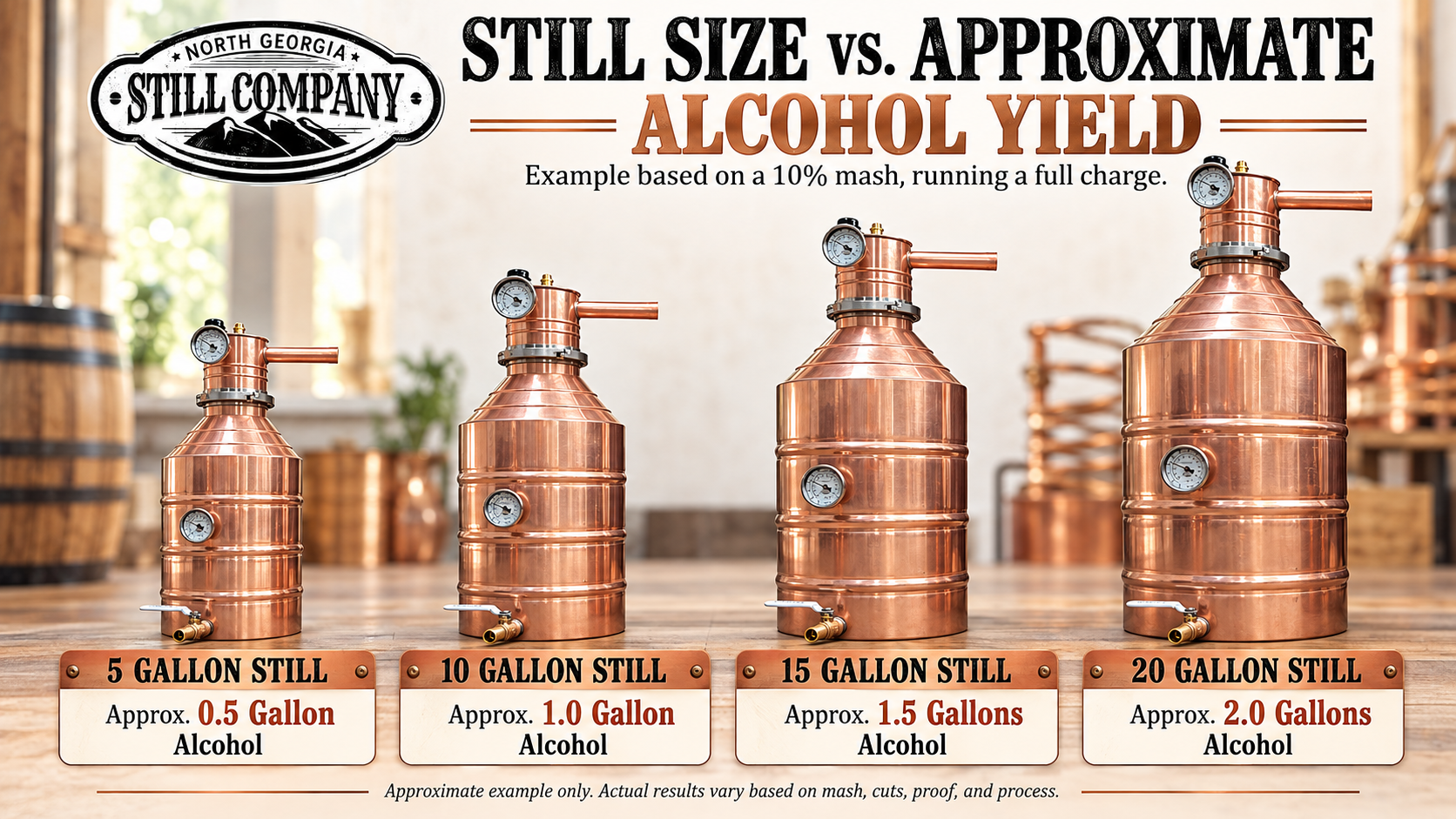
One of the first questions almost every new distiller ask is:
“What size still do I need?”
It sounds like a simple question, but choosing the right still size can make a big difference in how enjoyable the learning process is—and how soon you find yourself wishing you had bought something larger.
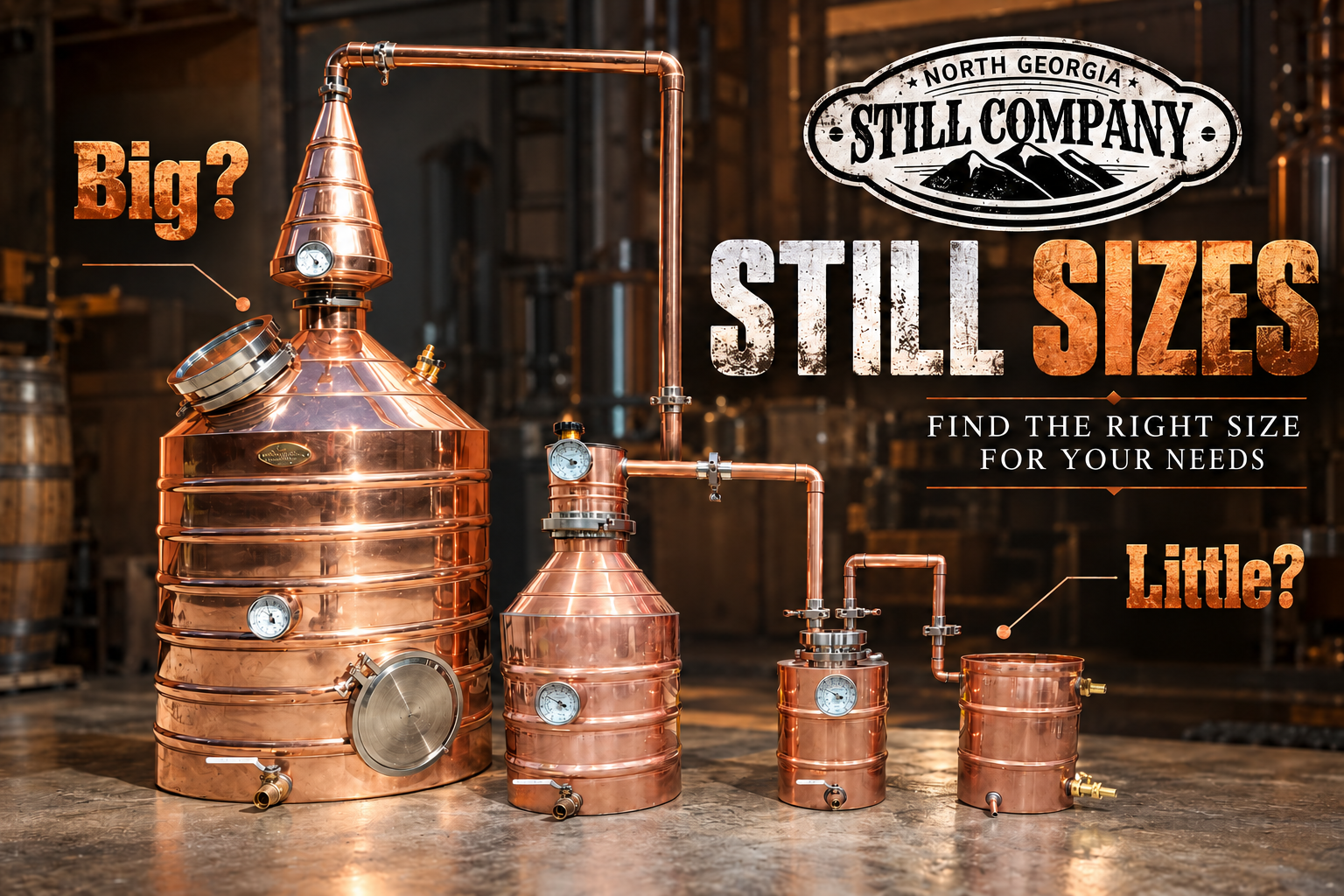
At North Georgia Still Company, we build stills in a wide range of sizes, and one thing we’ve learned over the years is that bigger isn’t always better—but buying too small can be just as frustrating.
For most beginners, we generally recommend starting somewhere in the 10- to 20-gallon range.
That may be slightly larger than some first-time buyers initially consider, but there’s a reason for it. A 10-, 15-, or 20-gallon still gives you enough capacity to grow into the hobby without forcing you to immediately run it at full capacity.
You can always make a smaller run in a larger still.
It’s much harder to make a larger run in a still that’s too small.
Let’s break down what you should consider before choosing your still size.
Still Capacity Doesn’t Mean You Have to Fill It Every Time
One misconception we hear frequently is that buying a 20-gallon still means you have to make a 20-gallon run every time you use it.
You don’t.
A larger still gives you capacity when you need it, but you can run smaller batches while you’re learning.
For example, someone purchasing a 15- or 20-gallon still may begin with smaller charges while they become familiar with their equipment. As their experience grows—and perhaps their fermentation capacity grows with it—they already have a still capable of handling larger batches.
That flexibility is one of the biggest reasons we often recommend buying slightly larger than you think you’ll need on day one.
It gives you room to grow.
Why We Generally Recommend a 10- to 20-Gallon Still for Beginners
For many hobby-scale users, we consider the 10, 15, and 20 gallon range to be a sweet spot.
They’re still manageable pieces of equipment, but they offer significantly more flexibility than very small stills.
There are three major advantages.
-
You Have Room to Grow
A lot of people start small because they’re unsure how much they’re going to use their still.
Then they discover they really enjoy the process.
Suddenly, the small still that seemed perfect three months ago requires multiple runs to process the amount they want to work with.
Starting with a 10-, 15-, or 20-gallon still can help prevent that.
You don’t necessarily need the extra capacity immediately. You’re simply buying enough equipment that your skills and interests have room to grow.
-
You Can Still Make Smaller Runs While Learning
Buying additional capacity doesn’t mean you have to use all of it.
Running smaller batches at first allows you to become familiar with things such as:
- How your still heats
- How vapor moves through the system
- How your condenser responds
- How quickly your equipment reacts to changes
- How your spirit changes throughout the run
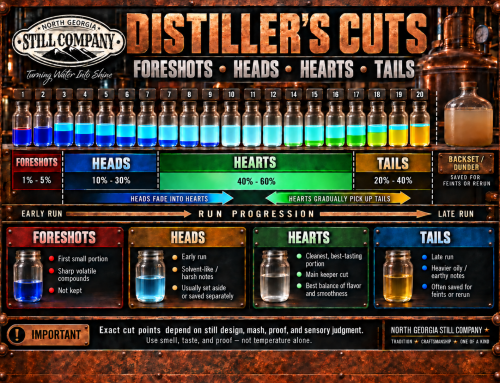
- How to recognize the transition between heads, hearts, and tails
As you become more comfortable, you can increase your batch size.
This gives beginners the best of both worlds: a manageable learning curve today and additional capacity tomorrow.
-
A Little More Volume Can Actually Make Learning Cuts Easier
This is an advantage that doesn’t always get discussed.
Learning to make good cuts between heads, hearts, and tails takes experience.
With an extremely small run, each portion of the run can also be very small. The transitions can seem to happen quickly, which gives a beginner less material to compare and less time to recognize what’s changing.
With a moderately larger run, there is simply more volume moving through those different portions.
That can make it easier to collect your output in multiple small containers, compare them, and begin learning the differences in aroma, flavor, and character from one part of the run to another.
The goal isn’t simply to produce more.
The extra volume can provide more opportunity to learn.
For someone serious about understanding the craft, that’s an important consideration.
Understanding Rated Still Capacity
When you see a still advertised as a 10-gallon, 20-gallon, or 50-gallon still, that number generally refers to the approximate capacity of the boiler.
That doesn’t necessarily mean you should fill the boiler completely to the top.
You need room inside the boiler for expansion, foaming, and vapor.
Exactly how much headspace you need can vary depending on what you’re running. Some washes behave very calmly, while grain-on or high-foaming mashes may require considerably more room.
That’s why it’s better to think of the advertised still size as the maximum physical capacity of the boiler, rather than assuming every 20-gallon still should always contain exactly 20 gallons of liquid.
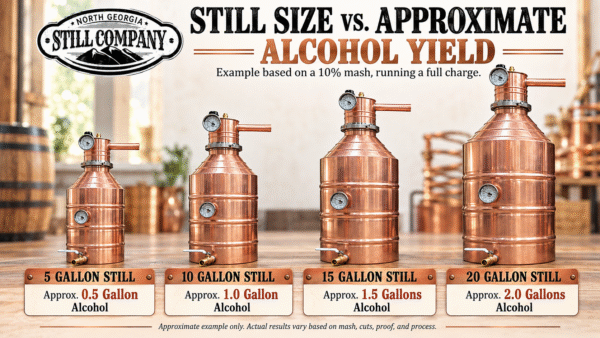
5-Gallon Stills: Good for Small-Scale Experimenting
A 5-gallon still can be a good choice for someone with extremely limited space or someone primarily interested in very small experimental runs.
Advantages include:
- Small footprint
- Easy to move
- Lower liquid volume to prepare
- Useful for experimentation
The downside is capacity.
Five gallons sounds like plenty when you’re starting out, but once you begin fermenting larger batches or want to process more material, it can become limiting relatively quickly.
For someone who knows they only want to work with very small batches, a 5-gallon still can make sense.
For someone who thinks the hobby may grow, we’d usually encourage looking at the next size up.
10-Gallon Stills: A Great Entry Point
A 10-gallon still is one of our favorite starting sizes.
It’s large enough to give you meaningful capacity without becoming overwhelming.
A 10-gallon system works well for someone who wants:
- A manageable first still
- Enough volume to practice making cuts
- The ability to make smaller runs
- Room to grow beyond tiny batches
- Equipment that doesn’t take up an excessive amount of space
If you’re unsure where to start, 10 gallons is a very sensible place to begin.
15-Gallon Stills: More Flexibility Without Going Huge
The 15-gallon range gives you noticeably more capacity while remaining very practical for hobby use.
This can be an excellent choice for someone who already knows they enjoy fermentation or expects to increase production once they become comfortable with the process.
The extra capacity also means you may be able to process a fermentation batch with fewer individual still runs.
For many users, 15 gallons is a great balance between size, capacity, and long-term usefulness.
20-Gallon Stills: Plenty of Room to Grow
For the beginner who knows they’re serious about learning, a 20-gallon still can be an excellent long-term choice.
It gives you enough capacity to grow significantly without forcing you to make full capacity runs from the beginning.
Start smaller.
Learn the equipment.
Build your confidence.
Then take advantage of the additional capacity when you’re ready.
A properly chosen 20-gallon still may serve someone for years rather than months.
That’s why we would often rather see someone purchase a system they can grow into than purchase something they’ll immediately outgrow.
30-Gallon Stills: Stepping Into Larger-Batch Territory
Once you reach approximately 30 gallons, you begin moving beyond what many first-time hobby users need.
A 30-gallon still can make sense for someone who:
- Already has fermentation experience
- Regularly prepares larger batches
- Has appropriate space for the equipment
- Wants to reduce the number of runs required to process a larger volume
- Knows they’re committed to the craft
Heating, cooling, weight, workspace, and overall handling become increasingly important considerations as still size increases.
At this point, you should start thinking about the entire system, not simply the capacity of the boiler.
50 Gallons and Larger: Think About the Whole Process
A 50-gallon still can process substantially more material, but it also requires the infrastructure to support it.
Before moving into this size range, think about:
- How much material you can realistically ferment
- How you’ll transfer liquid into the still
- Heating requirements
- Cooling-water requirements
- Ventilation and workspace
- Cleaning
- The physical size and weight of the equipment
- Where the equipment will permanently live
There’s little benefit to owning a large still if producing enough fermented material to feed it becomes a major chore.
Your fermentation capacity and your still capacity should make sense together.
Match Your Fermenters to Your Still
This is an often-overlooked part of choosing a still.
Think about the size of the batches you’re likely to ferment.
If you’re regularly fermenting approximately 5 gallons at a time, an enormous still probably doesn’t make much sense.
If you’re fermenting much larger batches but using a tiny still, you may find yourself performing run after run to process everything.
Ideally, the two sides of the operation should complement each other.
That doesn’t mean they have to match gallon-for-gallon. Remember that you’ll normally want some headspace in both fermentation vessels and your still boiler.
The important thing is thinking about your entire workflow rather than buying each piece of equipment independently.
Don’t Forget About Heating
As the still gets larger, the amount of energy required to heat it increases.
A heating method that works great for a small boiler may become painfully slow on a larger system.
Before buying your still, consider:
- Your available electrical service
- Whether you’ll use electric or another appropriate heat source
- The amount of liquid you’ll normally heat
- How quickly you realistically want the system to come up to temperature
This becomes increasingly important as you move into larger still sizes.
A properly matched heating system can make the difference between an enjoyable day in the shop and spending most of the day waiting for your still to heat.
Bigger Isn’t Automatically Better
After everything we’ve said about buying enough capacity to grow, it’s important to make the opposite point too:
Don’t buy a large still simply because you can.
A well-sized still fits the way you plan to use it.
There’s no reason to purchase a 50-gallon system if you expect to make small fermentation batches and only use the still occasionally.
The goal is finding the balance between:
What you need now
and
What you’re realistically likely to need later.
For many beginners, that balance happens somewhere between 10 and 20 gallons.
So, What Size Still Should a Beginner Buy?
If someone walks into North Georgia Still Company with no previous distilling experience and asks us where they should start, our answer will usually be:
Consider a 10, 15, or 20 gallon still.
A 10-gallon still is a great entry point for someone wanting a manageable first system.
A 15-gallon still gives you additional flexibility and room to grow.
A 20-gallon still makes sense for someone who knows they’re serious about learning and doesn’t want to outgrow their equipment anytime soon.
And remember:
You don’t have to fill a larger still to capacity.
You can begin with smaller runs, learn your equipment, practice making cuts, and increase your batch size as your experience grows.
In fact, having a little more volume to work with can make learning the differences between heads, hearts, and tails easier because you have more material to separate, compare, smell, and evaluate.
That’s one reason we often prefer putting a beginner into a slightly larger still rather than the smallest system available.
The Best Still Is the One That Fits How You Plan to Use It
There’s no single perfect still size for everyone.
The right choice depends on your goals, available space, fermentation capacity, heat source, budget, and how much you expect the hobby to grow.
If you’re just beginning and you’re torn between buying the smallest possible still and stepping up one or two sizes, think about where you expect to be six months or a year from now, not just where you are today.
Buying a little room to grow can save you from buying the same equipment twice.
At North Georgia Still Company, we build handcrafted stills in a variety of sizes and configurations. If you’re unsure which system makes sense for what you’re trying to accomplish, we’re happy to help you compare your options and choose equipment that fits both your current needs and where you want to go.
Browse North Georgia Still Company stills or contact us and we’ll help you choose the right size for your setup.
Always follow applicable federal, state, and local laws regarding the ownership and use of distilling equipment and the production of distilled spirits.